

What we do · Network
Our own network: two ASNs, many carriers, peering
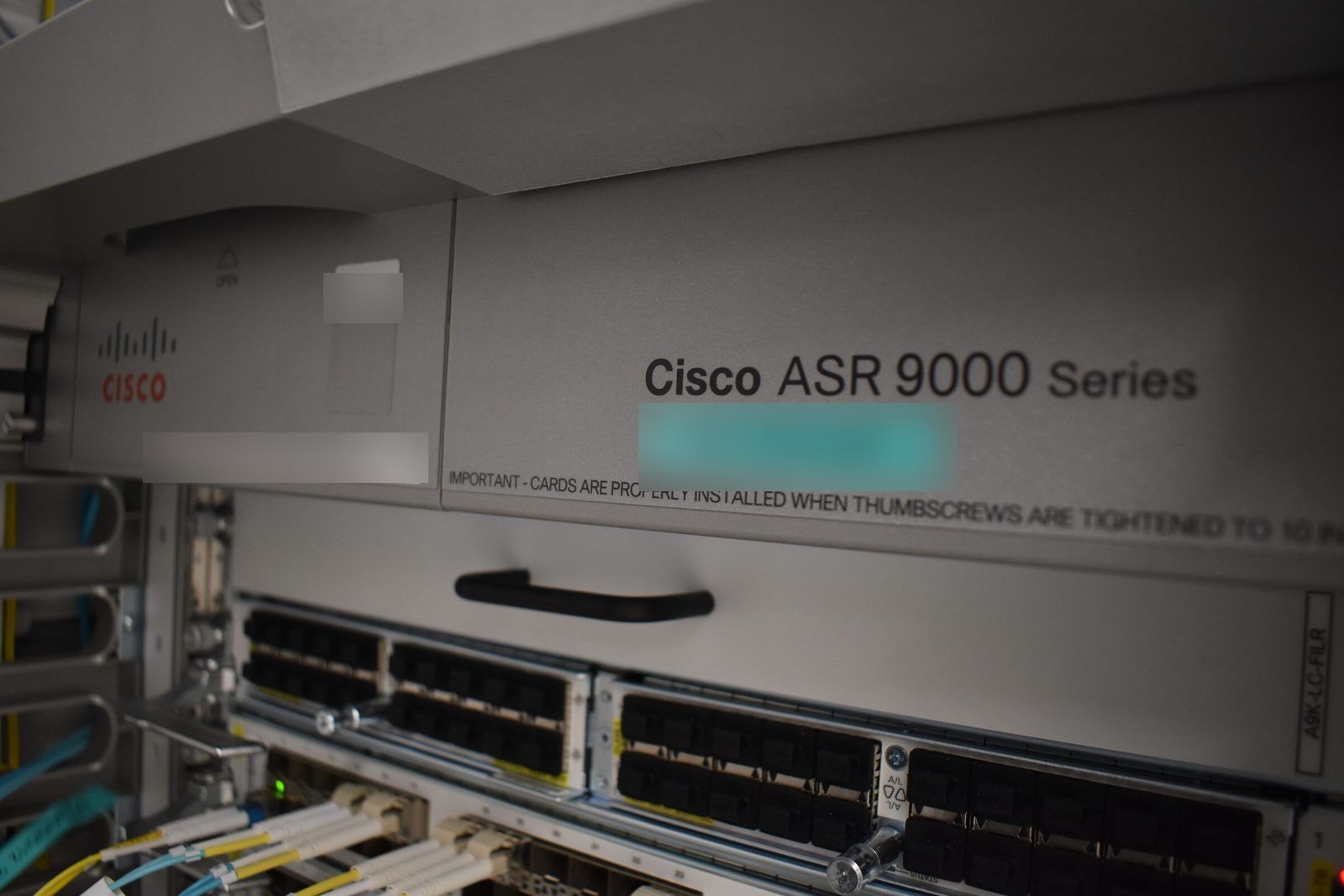
EuroVPS runs its own internet edge: our own autonomous systems, our own IPv4 and IPv6 address space, carrier-class routers and transit from several tier-one carriers at the same time. Your traffic does not depend on one upstream, one building's port or somebody else's routing policy.
What it is
We operate two RIPE-registered autonomous systems. AS200477 carries customer production; AS212200 carries our platform and internal services. Keeping them apart is deliberate: a change or a fault on one network cannot reach the other.
AS200477 is one network across all three of our sites: Athens, Amsterdam and Toronto. Wherever your servers sit, they are on our own autonomous system and our own address space.
Every site is multi-homed. In Athens we buy transit from OTE Globe, Cogent and Hurricane Electric. On the Amsterdam side we connect to Arelion, NTT, Deutsche Telekom and Telecom Italia. The sites are joined over private Layer 2 and our encrypted backbone, so the whole estate behaves as one network with one routing policy. We peer directly at GR-IX, the Athens internet exchange, and at NetIX, and we build bilateral sessions with the networks our customers actually talk to.
How we build it
- Carrier-class routers. Cisco ASR 9000 series at the Athens edge, with an ASR 9006 at the front of production, and Juniper MX204 in Amsterdam.
- Filtering before preference. Every inbound session drops bogons, our own prefixes, the default route and anything longer than a /24 before a single routing decision is made.
- Steering by design, not by default. A tiered local-preference scheme sends traffic over direct peering first, then a carrier's own customer cone, then the lowest-latency transit for everything else. A second carrier is held hot as standby, AS-path prepending shapes the return path, and a dedicated rule stops one carrier ever being used to reach another carrier's customers.
- Bilateral peering, one network at a time. On top of the exchange route servers we run direct sessions with a major global CDN (redundantly, across exchange fabrics), a global DNS anycast operator and the largest Greek mobile operator, among others.
- An outside view. We host a RIPE Atlas measurement anchor on the production network, measured continuously by probes all over the world.
What it protects you from
- One carrier's maintenance or failure taking your service off the internet.
- Long detours, where traffic to Greek, European and CDN destinations crosses half of Europe while a direct path exists.
- Somebody else's routing policy deciding your latency.
- A change on our platform network spilling into customer production.
In practice
A national news publisher, close to its readers. The publisher's sites are served from our Athens network inside Digital Realty, on the same exchange and the same Greek carriers as the people reading them.
A new exchange that earned its place in a day and a half. Within a day and a half of turning up NetIX, it was carrying real traffic, had opened a direct path to a major cloud network and had brought up a direct session with the largest Greek mobile operator. That operator's subscribers reach us in 1 to 2 ms, measured independently.
Faster by policy. Traffic between Athens and Amsterdam is steered onto a direct optical path, verified by traceroute. In independent comparisons of the Athens RIPE Atlas anchors, ours is consistently among the fastest to Germany, the Netherlands, the UK and the US.
Why EuroVPS
- Our own AS numbers and our own address space, not space borrowed from an upstream.
- Carrier-class Cisco and Juniper routing at the edge. No prosumer gear anywhere in the path.
- Several tier-one carriers live at once, plus direct peering at the Athens exchange.
- Routing policy written for latency and resilience, by engineers you can talk to directly.
- Measured from outside by an independent global platform, every minute of every day.
FAQ
Does my traffic leave through a single carrier? No. Outbound traffic takes the best path among direct peers and several transit carriers, and return traffic is shaped to match. If one carrier goes away, BGP moves your traffic to the others on its own.
What happens when a carrier schedules maintenance? The standby carrier is already hot. Routes reconverge onto the remaining paths, and we watch the effect from the outside through RIPE Atlas rather than guessing at it.
Are Athens, Amsterdam and Toronto separate networks? No. AS200477 spans all three, the sites are joined privately and run one routing policy, so carriers at any site serve the whole estate.
Is IPv6 included? Yes. Both autonomous systems announce their own IPv6 space, and our fabric is dual-stack down to your gateway at every site: Athens, Amsterdam and Toronto. See our IPv6 page.
If you want your platform on a network that is ours from the edge router inward, talk to an engineer.
Your next infrastructure partner
Let’s look at
your setup.
Tell us what you run today and what needs to improve. An engineer will review your brief and help you plan the next step.
+357 222 32280
who will look after your infrastructure.
Let’s start with your setup.
A little context helps us start the right conversation.