

Managed enterprise storage
Your data is not
inside your server.
All-flash volumesFor your customer data
Dual Fibre ChannelMore than one path
A second datacenterAsynchronous replication
Engineers on the fabricOperated by our own team
What your data actually sits on.
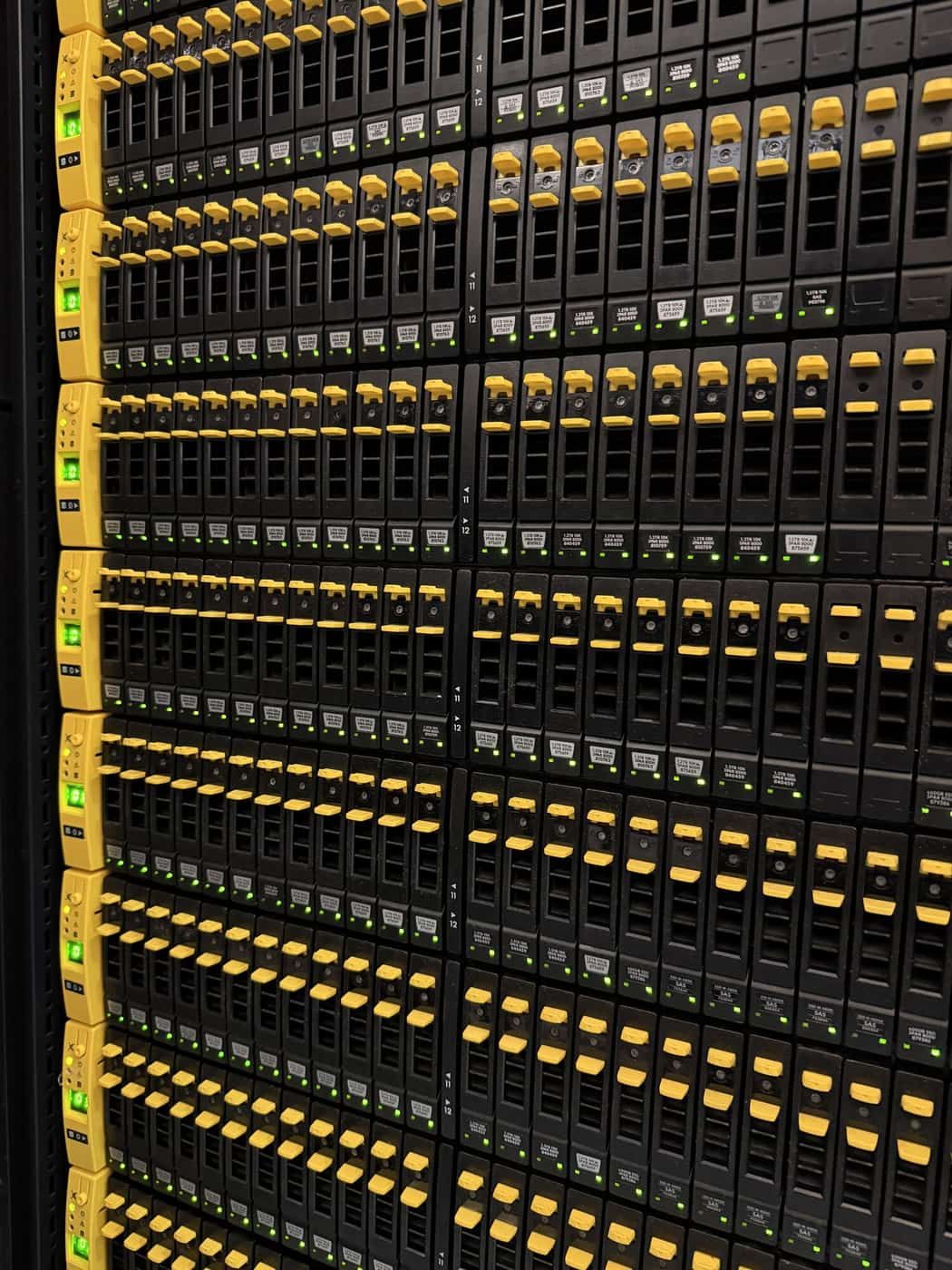
Our storage is an HPE 3PAR array on its own Fibre Channel fabric, with more than one path to it, and customer volumes are all-flash.
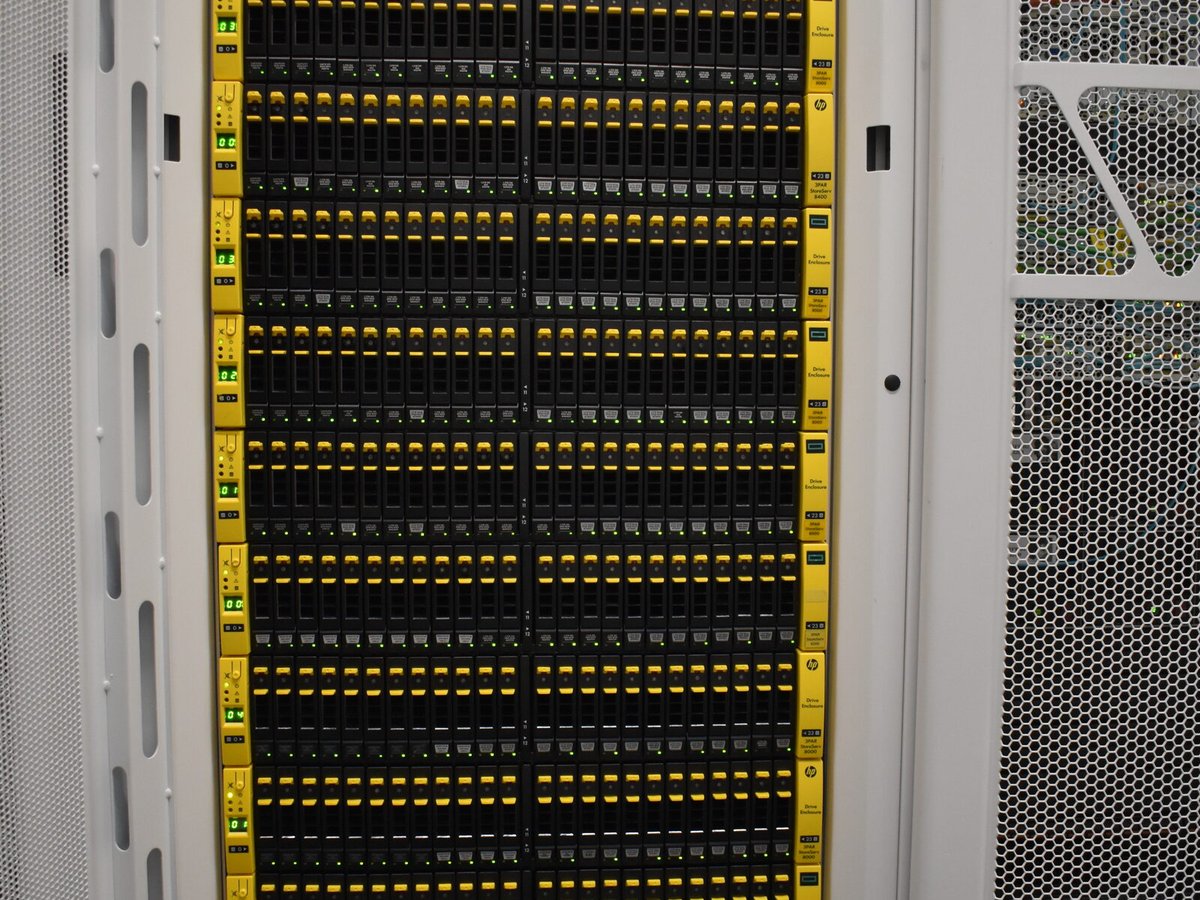
Your data sits on a separate enterprise array, on its own Fibre Channel fabric, with more than one path to it. If a server dies, the data is still there.
Five questions to ask about hosting storage →More than a dozen all-flash HPE 3PAR arrays. Inside each site the arrays are federated, so a volume can move live from one array to another while the hosts keep running. Between sites, copies are kept by asynchronous replication, outside the write path, so the distance is not in your application's path.
How our storage federation works →Continuously, at block level, over our own link between our datacenters. The recovery point is designed for each workload, and we agree the target with you.
How backup and DR actually work →Capacity for your workload
Part of your server.
Or a system of your own.
Choose a SAN-backed VPS, blade or private cloud, a dedicated array, or standalone block capacity. Rackmount servers with local NVMe are also available when shared storage is not required.
In a SAN-backed build
Our SAN-backed VPS, blade and private-cloud configurations use a separate array. Storage capacity is specified with the build. Rackmount servers can instead use local NVMe.
Compare bare-metal buildsAn array of your own
A private cloud can come with its own capacity that nobody else is on, replicated to our second site.
See Private CloudEngineered capacity, on its own
Enterprise customers buy block capacity from us directly, sized to the workload. Quoted per workload; there is no list price.
Talk to an engineerThe physical platform
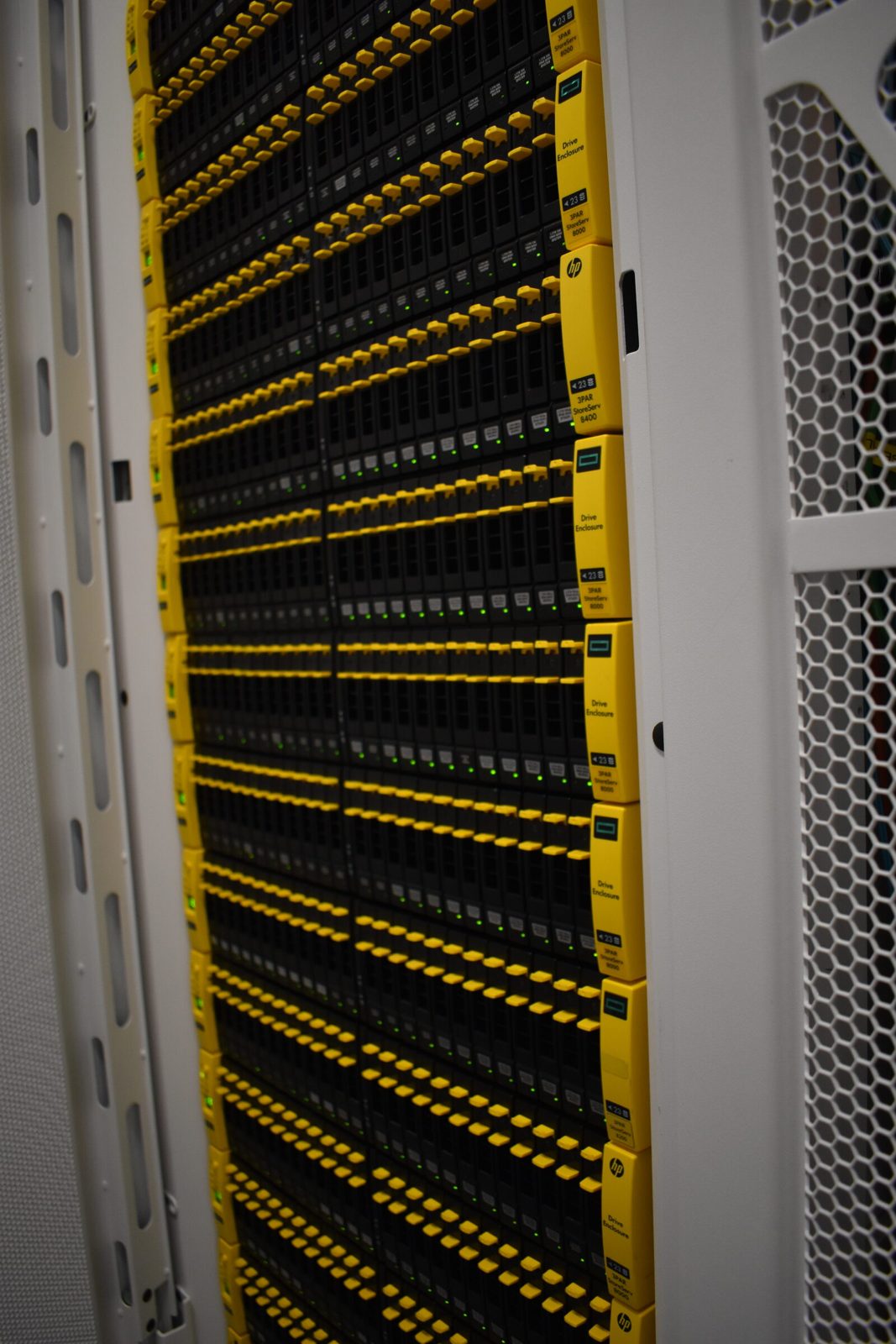
Our arrays.
In our racks.
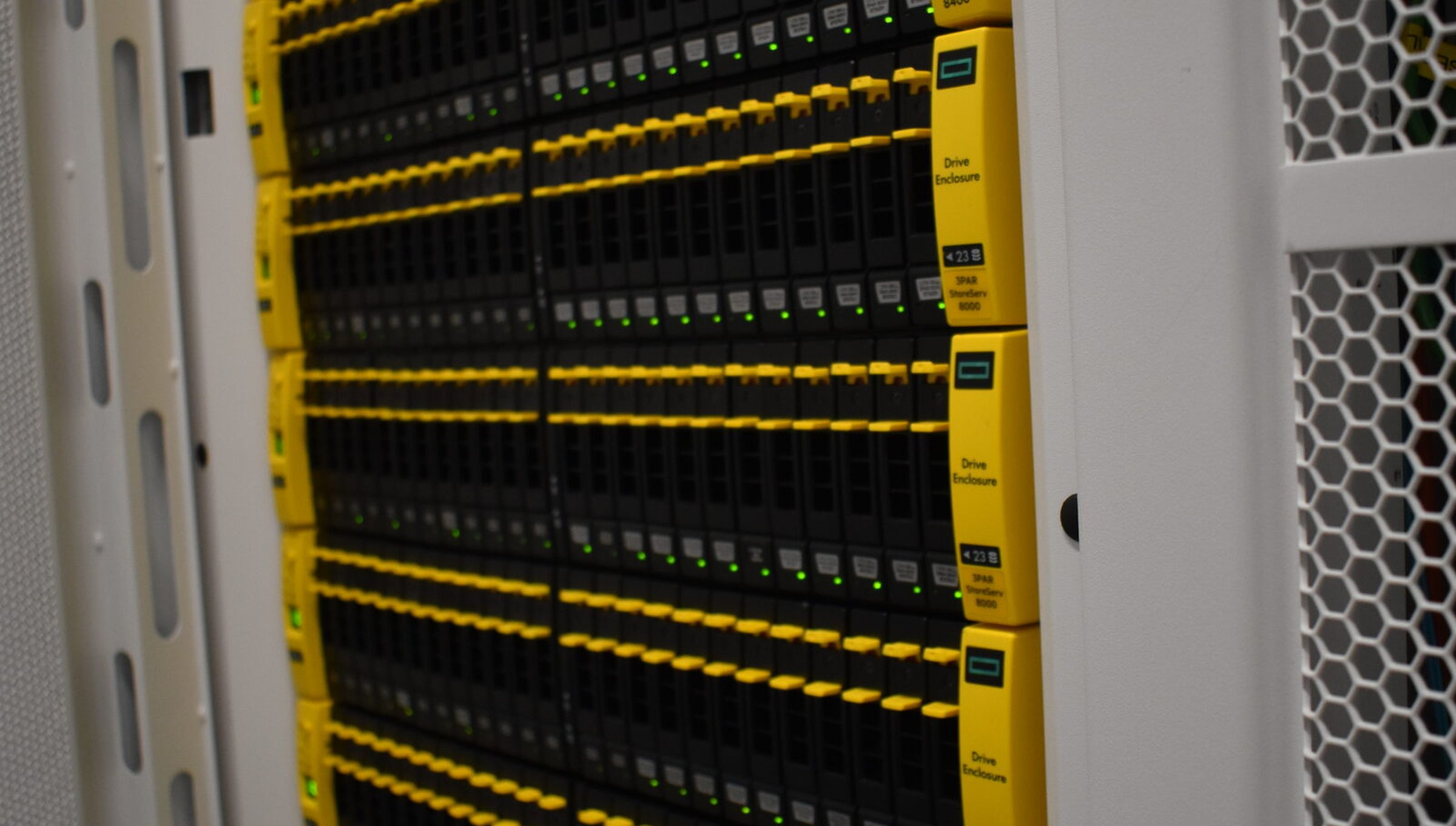
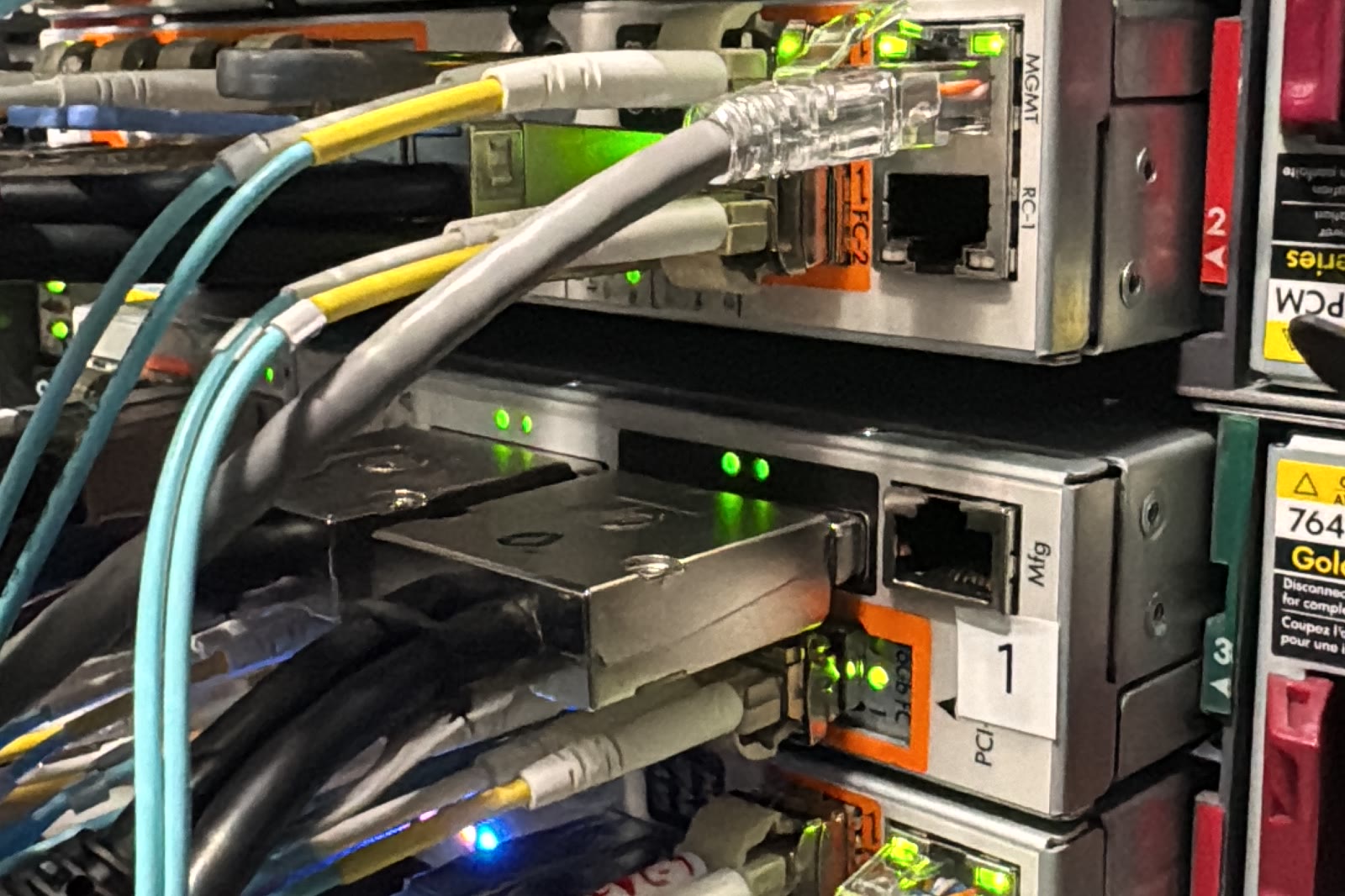
HPE 3PAR storage, separate from the machines that use it. You can visit the datacenter and see the hardware your data sits on.
Platform reference
The details
behind the volume.
Performance targets and capacity are agreed for your workload. These are the foundations we build on.
- ARRAY
- HPE 3PAR, enterprise block storage
- CUSTOMER VOLUMES
- All-flash
- PROTOCOL
- Fibre Channel, multipathed over dual Brocade fabrics
- PATHS
- Multipath. A dead switch costs a path, not a volume
- REPLICATION
- Continuous, block-level, to our second datacenter
- REPLICATION TYPE
- Asynchronous, with the recovery point designed for each workload
- REPLICATION PATH
- Our own link between our sites, never the open internet
- LATENCY
- Single-digit milliseconds, measured for your workload
- TENANCY
- Shared pool, or an array of your own on a private cloud
- WHO DEBUGS IT
- Our engineers, not a vendor queue
Choose the right layer
Start with what
your data needs.
We’ll tell you when a simpler option fits better.
Your workload suits local NVMe.
Our rackmount servers can use local NVMe when a shared array is not required. We review storage, backups and recovery requirements as part of choosing the build.
Compare bare-metal configurationsYou only need somewhere to put bytes.
If all you need is a place to park archives, tell us and we will say so. What we sell is storage under a server we run, or dedicated SAN capacity for customers who run bare metal or a private cloud with us.
Start with the machineYou need the tightest recovery point.
Within a site, HPE 3PAR Peer Persistence keeps volumes active across paired arrays. Between sites, replication is asynchronous and outside the write path. We design the protection around your recovery point before the build.
How backup and DR workBefore you provision
Know what your
storage can do.
Flash, failover, recovery points and replication. We’ll work through the details with you.
Talk to an engineerThis page covers our SAN-backed VPS, blade and private-cloud configurations. Their data sits on a separate enterprise array with multiple Fibre Channel paths. Our rackmount dedicated servers can instead use local NVMe. We confirm the storage architecture with your build.
Your next infrastructure partner
Tell us what your
storage needs to handle.
Bring your workload, capacity and recovery requirements. Our engineers will discuss the right storage and the infrastructure around it.
+357 222 32280
who will look after your infrastructure.
Let’s start with your setup.
A little context helps us start the right conversation.
From the engineering team