

What we do · Operations
DCIM: every object, port, cable and address tracked
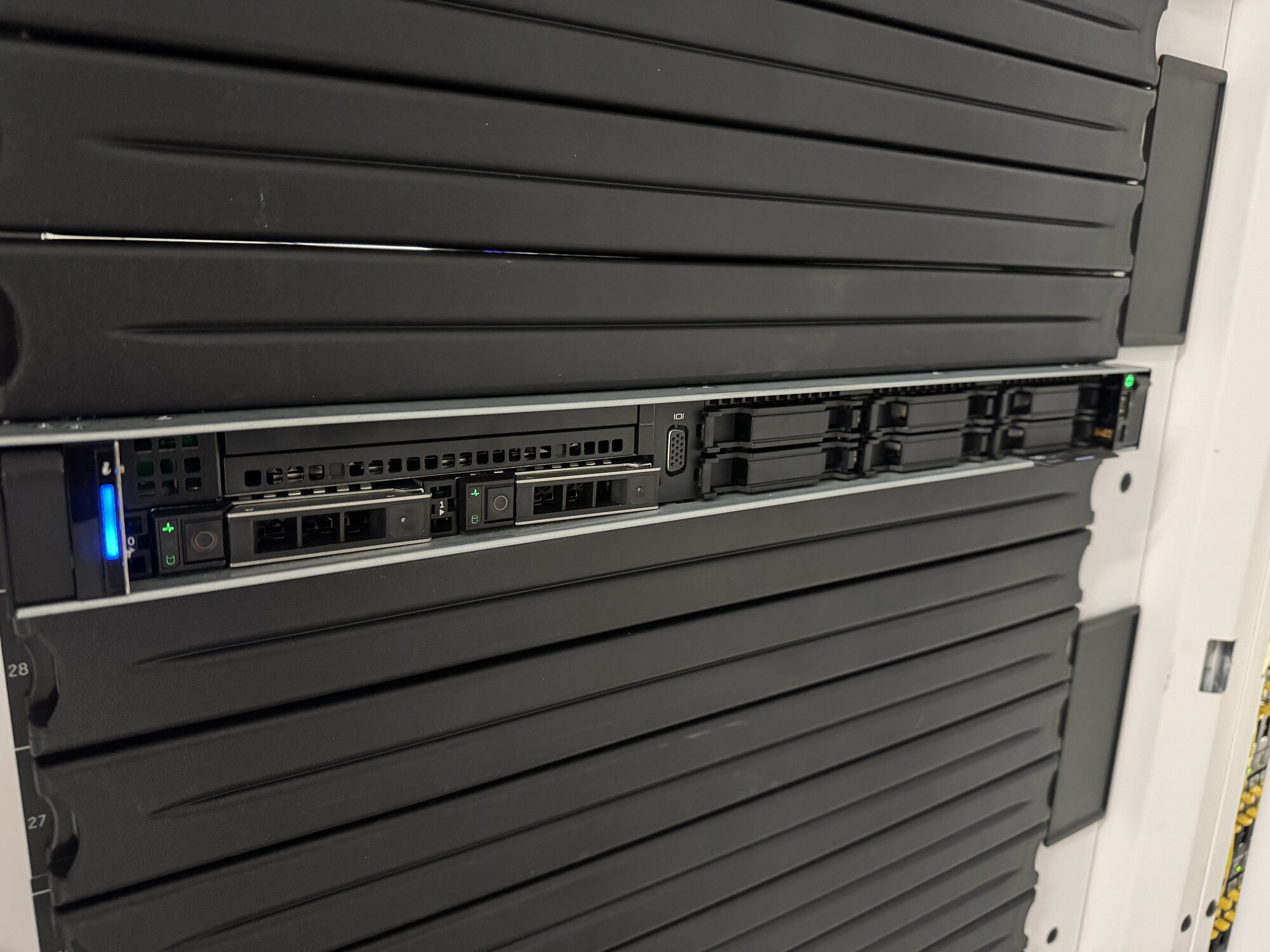
At three in the morning, "which switch port is that server on?" must have an answer in seconds, and the answer must be right. Our DCIM records every device, port, cable and address in every one of our datacenters, end to end, and every cable carries a unique printed ID that matches the record.
What it is
A self-hosted datacenter infrastructure management system, built on RackTables and extended by us, holding the physical and logical truth of our estate: every server, virtual machine, switch, firewall, power strip, fibre channel switch and blade enclosure; every rack position; every interface with its real MAC address; every IP allocation; every VLAN; every fibre channel zone; and every cable, with both of its ends.
"Tracked" means end to end, not a name in a list. A server in our DCIM has its rack units, its ports with their MAC addresses, a link from each port to the exact switch port on the other end, the cable ID on that link, its address allocations with the interface they live on, its management controller, and its place inside its chassis if it is a blade.
How we build it
The live device is the source of truth. DCIM is made to match the running network, never the other way round.
No address is assigned on faith. Before any IP address is given to anything, our tooling checks it three ways: free in DCIM, absent from the live ARP tables, and silent to ping. The live answer wins. The same tooling refuses to create a second object with a name or serial number that already exists.
Every new address gets its DNS. Each assignment is followed by its forward and reverse DNS records, so every address in our network resolves to a name that tells you what it is.
Live data, pulled in. Modules pull fibre channel zoning, storage exports, ARP tables, port status and switch configurations from the devices on demand. On top sit fast search across everything, a duplicates finder, freshness markers that show how recently a record was confirmed, a topology map, and a change audit with rollback.
A unique ID on every cable. Every cable carries a laminated label at both ends with a unique numeric cable ID, the far-end rack, device and port, and its length, printed on industrial label printers in one fixed format. The same number is recorded on the link in DCIM. Cable IDs come from a dedicated allocator that hands out numbers in order and never reuses one, not even the number of a cable that has since been removed. A watchdog re-reads DCIM every few minutes and alerts an engineer to any number that appears twice or was never allocated, and our tooling refuses to record a cable ID that was not reserved first.
What it protects you from
- An engineer guessing which port, which cable, which server.
- Two services handed the same IP address.
- A migration planned from an inventory nobody has checked in years.
- A cable pulled in the wrong rack because two labels looked alike.
- Records that drift from reality because nobody reads them back.
- Knowledge of the physical estate that lives only in one person's head.
In practice
Built on paper first. Before new servers are racked, every one of them is already in DCIM: rack units, management controllers, every data port with its MAC address read from the management controller, port-channels, the switch ports on the other end, and a reserved cable ID for every link. The label set is printed the evening before, and the servers are racked and cabled against a plan that is already the record.
A full blade rack, linked port by port. A whole rack of blade enclosures was tracked to our exemplar standard: every blade in its chassis bay, every network and fibre channel port linked to its exact interconnect port, every interconnect linked to its uplink, every management address recorded.
Why EuroVPS
- Real DCIM, end to end: ports, MACs, links, cables, addresses, zones.
- Every IP address verified free against the live network before use.
- A unique, printed, recorded ID on every cable, never reused.
- Records confirmed against the live devices, not trusted from memory.
FAQ
Can I get a record of my own hardware and cabling? Yes. On request, dedicated customers get an export of their devices, ports, cables and addresses.
What happens when hardware is replaced? The record is updated in the same job, including the MAC addresses and cable IDs, and read back before the job is closed.
Do you label cables in my rack too? Every cable we install carries a printed ID label at both ends, matched to the record.
If you want your hardware run by people who know where every cable goes, Talk to an engineer.
Your next infrastructure partner
Let’s look at
your setup.
Tell us what you run today and what needs to improve. An engineer will review your brief and help you plan the next step.
+357 222 32280
who will look after your infrastructure.
Let’s start with your setup.
A little context helps us start the right conversation.